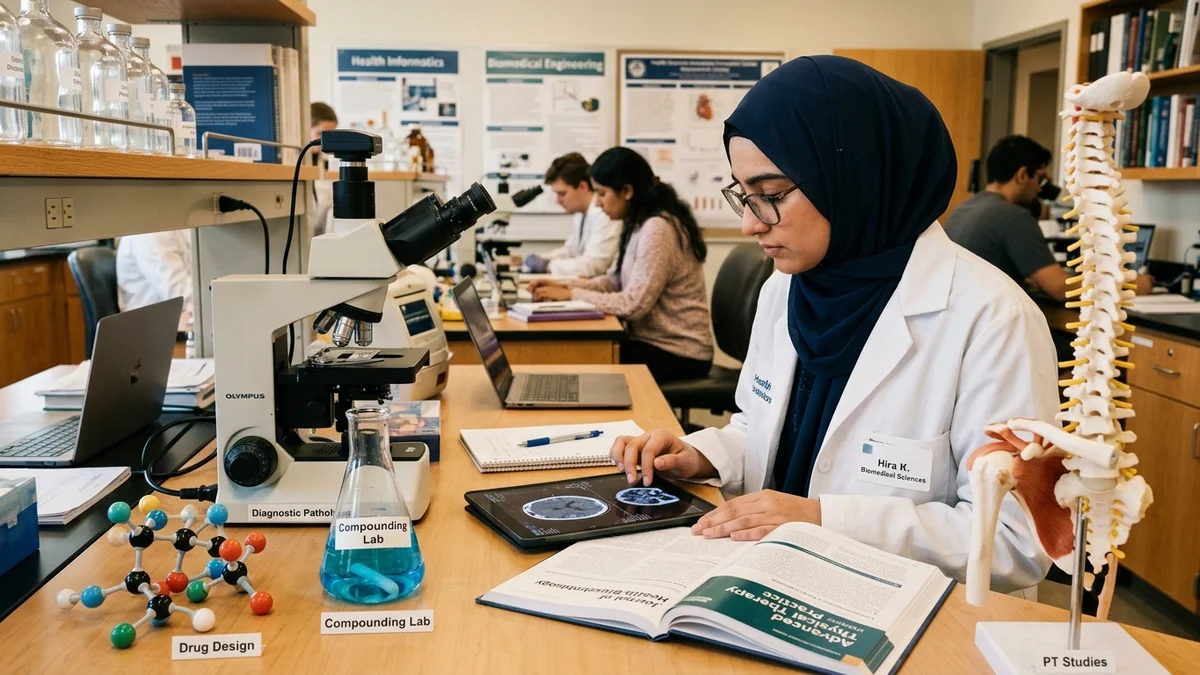
Is MBBS the Only Option After FSc Pre-Medical?
Every year, tens of thousands of dedicated students across Sindh, Punjab, Khyber Pakhtunkhwa, Balochistan, and Islamabad complete their Higher Secondary School Certificate (HSSC / FSc Pre-Medical) with aspirations of serving in healthcare and scientific disciplines. For generations, Pakistani academic culture has promoted the singular narrative that MBBS (Bachelor of Medicine, Bachelor of Surgery) is the only legitimate benchmark of academic achievement for pre-medical students.
This narrow perception creates immense psychological pressure, family conflict, and unnecessary despair for talented young scholars. In reality, modern healthcare, pharmaceutical research, computational biotechnology, and health administration rely on diverse, interdisciplinary teams of specialists. No single degree is automatically the "best" choice for every student.
Choosing your undergraduate degree requires evaluating six fundamental pillars rather than relying on social prestige:
- Demonstrable Subject Aptitudes: Evaluating whether your cognitive strengths align with continuous clinical memorization, physical laboratory instrumentation, biochemical analysis, or mathematical logic.
- Daily Work Environment: Distinguishing between high-pressure acute hospital ward rounds, outpatient rehabilitation clinics, corporate pharmaceutical production, community health policy, and private consulting rooms.
- Curriculum Rigor & Program Duration: Comparing 5-year clinical doctoral programs (MBBS, BDS, Pharm-D, DPT) with 4-year Bachelor of Science degrees (BS Nursing, BS Biotechnology, BS Computer Science) and their respective post-graduate training timelines.
- Statutory Council Licensing: Confirming whether your chosen career requires professional practice licensing through regulatory bodies such as the Pakistan Medical & Dental Council (PMDC), Pharmacy Council of Pakistan (PCP), Pakistan Nursing & Midwifery Council (PNMC), or Allied Health Professionals Council (AHPC).
- Financial Investment & Opportunity Cost: Balancing public sector merit thresholds against private institutional tuition fees, residency stipends, and the timeline to financial independence.
- Personal Career Vision: Identifying whether you aspire to direct patient care, laboratory discovery, clinical technology management, healthcare entrepreneurship, or international higher education.
FSc Pre-Medical builds an exceptionally demanding foundation in biology, chemistry, and physics. That foundation qualifies you for dozens of high-impact professional degrees across Pakistan and worldwide. Exploring these opportunities through profile-based Career Counselling in Karachi enables students and families to make strategic, evidence-based choices without leaving their future to chance.
Decision Checklist: Questions to Ask Before Choosing a Degree
Before submitting university application forms and non-refundable admission fees, work through this targeted self-assessment checklist:
- Do I actually enjoy patient-facing clinical care? Direct healthcare demands emotional resilience, empathy, physical stamina, and comfort with human distress, blood, and acute illness.
- Do I prefer laboratory diagnostics and scientific investigation? If you are fascinated by pathogen identification, DNA sequencing, cellular pathology, and high-precision testing, laboratory and molecular sciences may suit you better than bedside care.
- Am I drawn to musculoskeletal and physical rehabilitation? If helping patients recover mobility after stroke, spinal trauma, or athletic injuries inspires you, physical therapy is an independent, non-pharmacological clinical pathway.
- Do medicines, biochemical mechanisms, and therapeutics interest me? If you are intrigued by drug discovery, chemical interactions, dosage formulation, and clinical pharmacy, pharmaceutical sciences offer vast corporate and clinical avenues.
- Am I fascinated by human cognition, mental health, and behavior? If understanding emotional patterns, neurological wellness, and behavioral counseling motivates you, psychology and behavioral sciences provide growing avenues.
- Am I interested in nutrition, metabolic wellness, and preventative lifestyle health? Clinical dietetics and human nutrition focus on chronic disease prevention, pediatric wellness, and therapeutic dietary management.
- Do I have an underlying interest in computing, data analytics, or software systems? If you enjoy algorithmic problem-solving and digital technology, recent regulatory reforms permit pre-medical students to transition directly into Computer Science, Artificial Intelligence, and Data Science.
- What subjects was I genuinely strongest in during FSc? Differentiate between marks earned through rote memorization for board exams versus concepts you genuinely understood and enjoyed exploring.
- Does my target university accept my exact academic background? Admission prerequisites, entry tests (MDCAT, university-specific tests), and aggregate formulas vary significantly across institutions.
- Is the program officially recognized by the relevant statutory council? Enrolling in an unaccredited degree or an unauthorized campus leads to catastrophic licensing refusals after graduation.
Medicine and Dentistry: MBBS and BDS
Bachelor of Medicine, Bachelor of Surgery (MBBS) and Bachelor of Dental Surgery (BDS) remain the traditional clinical cornerstones for pre-medical students. Both programs provide comprehensive training in human anatomy, physiology, pathology, pharmacology, and clinical diagnostic medicine.
Academic Structure and Licensing
- MBBS Duration: 5 academic years of intensive preclinical and clinical coursework followed by 1 mandatory year of rotational house job / clinical internship at an affiliated teaching hospital.
- BDS Duration: 4 academic years covering oral anatomy, maxillofacial pathology, operative dentistry, orthodontics, and prosthodontics, followed by 1 mandatory year of dental house job.
- Regulatory Authority: Both degrees are regulated exclusively by the Pakistan Medical & Dental Council (PMDC). Lawful practice in Pakistan requires successful graduation from a PMDC-recognized medical or dental college, completion of an approved house job, and holding valid PMDC registration.
Current Admission Framework
Under PMDC regulations, eligibility to apply for MBBS and BDS admissions requires:
- Minimum 60% aggregate marks in FSc Pre-Medical (or equivalent HSSC certification with Biology, Chemistry, and Physics/Mathematics).
- Passing the centralized Medical & Dental College Admission Test (MDCAT) administered by designated provincial admitting universities under PMDC guidelines.
- Traditional merit aggregate formula: 50% MDCAT score, 40% FSc Pre-Medical marks, and 10% SSC / Matriculation marks.
Important Regulatory Advisory: Scoring the minimum qualifying percentage in the MDCAT grants eligibility to apply, but it does not guarantee admission. Public medical and dental college seats are strictly limited and awarded on intense open-merit aggregate competition. Private medical colleges charge regulated annual tuition fees and maintain their own merit lists based on PMDC policies. Students should always evaluate their realistic aggregate early and prepare structured parallel alternatives.
Allied Health and Rehabilitation Pathways
Modern healthcare delivery depends on multidisciplinary allied health professionals who operate advanced diagnostic machinery, conduct clinical laboratory tests, and manage specialized rehabilitation therapies. In Pakistan, these vital disciplines are regulated under the Allied Health Professionals Council (AHPC) Act, 2022, providing formal statutory recognition, standardized degree frameworks, and professional registration for qualifying practitioners.
1. Doctor of Physical Therapy (DPT)
- Program Overview: DPT is a 5-year professional doctorate degree focusing on neuromusculoskeletal rehabilitation, biomechanics, kinesiology, cardiopulmonary therapy, pediatric rehabilitation, and sports physical therapy.
- Eligibility & Council: Requires FSc Pre-Medical with minimum 60% marks at recognized medical universities and healthcare faculties. Regulated under the AHPC framework.
- Work Environment: Physical therapists practice in tertiary care hospital rehabilitation departments, specialized spine and orthopedic centers, pediatric clinics, athletic sports clubs, and independent private rehabilitation clinics. Physical therapy does not involve prescribing systemic pharmaceutical drugs or performing surgery; it relies on manual manipulation, exercise therapy, electrotherapy, and biomechanical rehabilitation.
2. BS Medical Laboratory Technology (BS MLT)
- Program Overview: A 4-year Bachelor of Science program training clinical scientists in hematology, clinical biochemistry, histopathology, medical microbiology, immunology, and blood banking.
- Scope & Practice: Medical laboratory technologists supervise clinical laboratories, operate automated clinical analyzers, analyze patient specimens, and validate diagnostic reports. They are indispensable to pathology laboratories, hospital diagnostic wards, forensic laboratories, and medical research institutes.
3. BS Medical Imaging Technology (MIT / Radiology)
- Program Overview: A 4-year degree covering diagnostic radiography, computed tomography (CT scanning), Magnetic Resonance Imaging (MRI), ultrasound sonography, and nuclear medicine instrumentation.
- Clinical Role: Technologists collaborate with consultant radiologists to position patients, calibrate ionizing and non-ionizing imaging equipment, execute advanced imaging protocols, and ensure radiation safety standards.
4. Additional Recognized Allied Health Disciplines
Depending on the university and regional healthcare institution, pre-medical graduates can explore:
- BS Optometry & Vision Sciences (4–5 years): Specializing in refractive error correction, contact lens fitting, binocular vision assessment, and primary eye care.
- BS Respiratory Therapy (4 years): Focused on critical care ventilator management, cardiopulmonary physiology, and intensive care pulmonary support.
- BS Operation Theater Technology (OTT - 4 years): Managing surgical suites, sterilization protocols, surgical instrumentation, and assisting surgical teams.
- BS Speech & Language Pathology (4–5 years): Diagnosing and treating speech, language, voice, and swallowing disorders across pediatric and adult populations.
Institutional Verification Note: Allied health degree titles, durations, and clinical hospital affiliations vary by university. Always verify that your target program is accredited by the Higher Education Commission (HEC) and recognized by the Allied Health Professionals Council (AHPC) before enrolling.
Pharm-D and Pharmaceutical Sciences
The Doctor of Pharmacy (Pharm-D) is a 5-year professional clinical degree regulated by the Pharmacy Council of Pakistan (PCP). It trains graduates as experts in medication management, pharmaceutical chemistry, industrial formulation, and therapeutics.
Core Academic Modules
Pharm-D students study pharmaceutical organic chemistry, medicinal chemistry, clinical pharmacokinetics, toxicological analysis, industrial pharmacy, biopharmaceutics, hospital pharmacy management, and national drug laws.
Eligibility Criteria
- Minimum 60% marks in FSc Pre-Medical (or recognized foreign equivalent certified by IBCC).
- University admission tests or provincial entrance examinations where mandated by individual institutions.
Professional Career Directions
- Hospital & Clinical Pharmacy: Working within hospital multidisciplinary teams to evaluate patient drug charts, prevent harmful drug-drug interactions, optimize dosage regimens, and advise physicians on therapeutic choices.
- Industrial Manufacturing & Production: Overseeing large-scale pharmaceutical synthesis, formulation design, tablet compression, sterile injectable manufacturing, and cleanroom operations across national and multinational pharmaceutical firms.
- Quality Control (QC) & Quality Assurance (QA): Operating advanced chromatography (HPLC, GC), spectroscopy, and dissolution equipment to verify that commercial batches meet national and international pharmacopeial standards.
- Drug Regulatory Affairs (DRA): Compiling pharmaceutical dossiers, ensuring compliance with the Drug Regulatory Authority of Pakistan (DRAP), managing product registrations, and tracking pharmacovigilance.
- Community & Retail Pharmacy Management: Directing licensed retail pharmacies, ensuring lawful storage of controlled substances, and providing patient medication counseling.
Graduates who successfully complete their 5-year Pharm-D from an institution recognized by the Pharmacy Council of Pakistan are eligible to register as Category-A Pharmacists, granting them the legal right to practice pharmacy and hold retail, distribution, or manufacturing licenses.
BS Nursing and Professional Nursing
Nursing is a cornerstone of modern healthcare systems globally. In Pakistan, the historic diploma system has transitioned into the rigorous 4-year Generic Bachelor of Science in Nursing (BSN), regulated by the Pakistan Nursing & Midwifery Council (PNMC) and recognized by the Higher Education Commission (HEC).
Academic Structure and Eligibility
- Program Duration: 4 academic years of didactic and clinical hospital study, followed by 1 mandatory year of clinical internship / house job.
- Eligibility: FSc Pre-Medical with minimum 50% marks, with Biology as a mandatory subject. Admissions in public sector nursing colleges are conducted via provincial entry tests, while private university colleges (such as Aga Khan University School of Nursing, Dow University of Health Sciences, and Shifa Tameer-e-Millat) conduct institutional entry exams.
The Reality of Modern Nursing Practice
Professional nursing is an intellectually demanding clinical discipline requiring comprehensive understanding of pharmacology, clinical pathophysiology, emergency triage, infection control, and patient advocacy:
- Acute & Intensive Care: Managing arterial lines, mechanical ventilators, continuous cardiac monitoring, and titration of life-saving intravenous infusions in ICUs, CCUs, and trauma emergency centers.
- Surgical Nursing: Assisting preoperative assessment, scrub and circulating nurse duties, postoperative recovery room care, and surgical wound management.
- Global Demand & Migration Pathways: BSN graduates who clear international licensing exams (such as NCLEX-RN for the United States, NMC CBT/OSCE for the UK, or OET/IELTS) experience some of the highest international skilled migration acceptance rates worldwide, with established sponsorship routes across the UK NHS, Middle East healthcare systems, Ireland, Canada, and Australia.
Life Sciences and Research-Oriented Degrees
For students whose passion lies in biological investigation, cellular mechanisms, genetic technologies, and laboratory discovery rather than daily hospital bedside care, 4-year Bachelor of Science (BS) programs in life sciences provide powerful academic avenues.
Pakistani public and private universities offer specialized BS degrees accredited by the Higher Education Commission (HEC):
- BS Biotechnology: Applying biological organisms, enzymes, and genetic tools to create commercial products. Key specializations include industrial biotechnology (bio-fuels, enzyme production), agricultural biotechnology (drought-resistant crops, bio-fertilizers), and medical biotechnology (recombinant insulin, monoclonal antibodies).
- BS Microbiology: Exploring bacteria, viruses, fungi, and parasites. Prepares graduates for clinical diagnostic laboratories, pharmaceutical environmental monitoring, food safety quality control, water purification testing, and immunological research.
- BS Biochemistry: Investigating chemical processes within living organisms. Essential for clinical diagnostic laboratories, metabolic research, oncology drug screening, and nutritional research institutes.
- BS Molecular Biology & Genetics: Focusing on gene expression, recombinant DNA technology, CRISPR gene editing, hereditary disease diagnostics, and forensic DNA profiling.
- BS Bioinformatics: A powerful cross-disciplinary field combining molecular biology with computer science, genomics databases, and algorithmic data analysis. Ideal for pre-medical students who enjoy computational biology.
Career Opportunities in Life Sciences
Life sciences degrees lead toward careers in research organizations (such as PCSIR, NIH Islamabad, CEMB Lahore, and KIBGE Karachi), diagnostic molecular testing centers, pharmaceutical quality assurance, food and beverage manufacturing, agricultural seed corporations, and academic teaching. Furthermore, a BS in Life Sciences provides an exceptional springboard for fully funded international MS and PhD scholarships across Europe, North America, and Asia.
Nutrition, Public Health, and Psychology
Healthcare extends far beyond hospital surgical units into preventative health, community wellness, systemic epidemiology, and mental healthcare. Pre-medical students with strong communication skills and an interest in social wellness frequently thrive in these disciplines:
1. BS Human Nutrition & Dietetics (HND)
- Program Focus: 4 to 5 years of study covering nutritional biochemistry, clinical diet therapy, human metabolism, community nutrition, food safety, and therapeutic meal planning.
- Professional Scope: Clinical dietitians evaluate metabolic disorders (diabetes, hypertension, renal disease, gastrointestinal ailments) and prescribe medical nutrition therapies in hospitals, outpatient wellness clinics, sports athletic centers, and food industry production units.
2. BS Public Health (BSPH)
- Program Focus: 4-year degree addressing disease prevention, epidemiological outbreak tracking, biostatistics, maternal and child healthcare policy, environmental health, and health economics.
- Career Scope: Public health specialists design community health interventions, coordinate immunization programs, and manage healthcare projects with governmental health departments and international development agencies (such as WHO, UNICEF, and global health NGOs).
3. BS Psychology / Applied Psychology
- Program Focus: 4 years covering cognitive psychology, developmental psychology, neurobiology of behavior, psychometric testing, research methods, and social dynamics.
- Professional Distinction: Completing a 4-year BS in Psychology provides foundational training in psychological theories and behavioral research. It qualifies graduates for human resource management, educational counseling, organizational development, and social research. However, lawful practice as a Clinical Psychologist in Pakistan requires subsequent post-graduate training (such as an MS or Advanced Diploma in Clinical Psychology - ADCP) including supervised hospital psychiatric clinical rotations.
Can FSc Pre-Medical Students Move Into Computer Science or Technology?
One of the most consequential higher education reforms in Pakistan over recent years is the official pathway allowing FSc Pre-Medical students to transition directly into undergraduate computing and information technology programs.
The Official Regulatory Position (HEC & NCEAC)
Historically, university admission councils required FSc Pre-Engineering or ICS (Intermediate in Computer Science) with Mathematics for all computing degrees. However, recognizing the interdisciplinary nature of computational sciences and the analytical rigor of pre-medical students, the Higher Education Commission (HEC) and the National Computing Education Accreditation Council (NCEAC) issued revised curriculum guidelines enabling pre-medical students to apply for computing disciplines.
Under this established framework, pre-medical students are eligible to apply for:
- BS Computer Science (BSCS)
- BS Software Engineering (BSSE)
- BS Artificial Intelligence (BSAI)
- BS Data Science (BSDS)
- BS Cyber Security (BSCS-Cyber)
- BS Information Technology (BSIT)
The Mandatory Mathematics Deficiency Requirement
To bridge the gap between biological sciences and university-level computational mathematics, admitted pre-medical students are required to clear:
- Mathematics Deficiency Coursework: Typically amounting to 6 credit hours (usually 2 structured preparatory courses such as Deficiency Mathematics-I and Deficiency Mathematics-II) during their first two semesters of bachelor's studies.
- These deficiency courses cover foundational algebra, trigonometry, differential calculus, and analytical geometry necessary for subsequent coursework in algorithms, machine learning, and discrete mathematics.
Crucial Institutional Verification Callout: While HEC and NCEAC permit pre-medical entry into computing programs, individual universities retain institutional autonomy over their admission policies, entry tests, and quota allocations. Some universities (such as FAST-NUCES, NUST, COMSATS, ITU Lahore, and Karachi University) administer institutional entry tests that include quantitative reasoning or mathematics sections. Always verify the current prospectus and entry test structure of your target university before applying.
This pathway offers a phenomenal alternative for pre-medical students who possess logical and analytical habits and wish to enter Pakistan’s burgeoning software export sector, artificial intelligence engineering, or international digital technology markets.
Comparison Matrix: Degree Pathways After FSc Pre-Medical
To help students and parents compare undergraduate alternatives side by side without artificial rankings or subjective scores, the following matrix outlines the core attributes of each pathway:
| Pathway | Study Focus | Typical Learning Environment | Suitable Aptitude & Interests | Baseline Regulatory Eligibility | Relevant Professional Regulator |
|---|---|---|---|---|---|
| Medicine (MBBS) | Acute clinical diagnosis, medical pharmacology, internal medicine, & surgery | Tertiary teaching hospital wards, emergency units, & outpatient clinics | High clinical empathy, emotional endurance, & long-term commitment | Min 60% in FSc Pre-Medical + qualifying MDCAT pass | Pakistan Medical & Dental Council (PMDC) |
| Dentistry (BDS) | Oral maxillofacial pathology, orthodontics, operative dental surgery | Dental teaching hospitals, surgical clinics, & private dental operatories | Fine manual dexterity, surgical precision, & spatial visualization | Min 60% in FSc Pre-Medical + qualifying MDCAT pass | Pakistan Medical & Dental Council (PMDC) |
| Physical Therapy (DPT) | Neuromusculoskeletal rehabilitation, kinesiology, & physical biomechanics | Hospital rehabilitation centers, outpatient therapy clinics, sports facilities | Passion for physical therapy, movement science, & non-surgical healing | Min 60% in FSc Pre-Medical (institution specific) | Allied Health Professionals Council (AHPC) |
| Pharmacy (Pharm-D) | Pharmacology, pharmaceutics, drug design, & clinical toxicology | Hospital pharmacies, manufacturing plants, & drug testing laboratories | Strong chemical reasoning, detail orientation, & therapeutic interest | Min 60% in FSc Pre-Medical from recognized board | Pharmacy Council of Pakistan (PCP) |
| Nursing (Generic BSN) | Bedside acute care, emergency triage, ICU monitoring, patient advocacy | Intensive care units, hospital wards, & community clinics | High patient empathy, rapid clinical decision-making, & physical stamina | Min 50% in FSc Pre-Medical (Biology compulsory) | Pakistan Nursing & Midwifery Council (PNMC) |
| Medical Lab Tech (BS MLT) | Clinical pathology, hematology, microbiology, & automated diagnostic testing | Diagnostic pathology laboratories, blood banks, & research centers | Laboratory precision, diagnostic problem-solving, & technical focus | Min 50% in FSc Pre-Medical (institution specific) | Allied Health Professionals Council (AHPC) |
| Medical Imaging (BS MIT) | Radiography, CT scanning, MRI, diagnostic ultrasound, & radiation safety | Radiology departments, diagnostic imaging centers, & trauma units | Technological affinity, patient positioning, & diagnostic imaging | Min 50% in FSc Pre-Medical (institution specific) | Allied Health Professionals Council (AHPC) |
| Biotechnology & Molecular | Genetic engineering, fermentation, molecular diagnostics, bioinformatics | Research laboratories, bio-manufacturing, & university facilities | Scientific curiosity, investigative experimentation, & research drive | Min 45%–50% in FSc Pre-Medical (HEC guidelines) | Higher Education Commission (HEC) |
| Nutrition & Dietetics (HND) | Clinical nutrition therapy, human metabolism, & community dietetics | Hospitals, metabolic clinics, wellness centers, & food industry | Interest in preventative wellness, metabolic health, & diet counseling | Min 50% in FSc Pre-Medical (institution specific) | HEC & Relevant Councils |
| Computing & AI (BS CS/AI/DS) | Software engineering, machine learning algorithms, & database systems | Software development companies, tech hubs, & remote digital workstations | Strong logical reasoning, algorithmic thinking, & digital interest | Min 50% in FSc Pre-Medical + 6 credit hours Math deficiency | HEC & NCEAC Council |
6-Step Pre-Medical Career Decision Framework
To transition from emotional uncertainty to a structured, confident career choice, follow this 6-step decision framework:
- Step 1: Self-Audit Your Genuine Daily Interests: Honestly examine the day-to-day work tasks you find fulfilling. Do you thrive on face-to-face patient interaction, or do you prefer quiet diagnostic laboratory analysis, computational software coding, or corporate pharmaceutical management?
- Step 2: Review Your Exact Academic & Quantitative Strengths: Analyze your actual understanding in Biology, Chemistry, Physics, and Mathematics. If numerical calculations and logic come naturally, fields like Computer Science or Biotechnology offer great synergy. If biology and physiology are your core strengths, physical therapy, pharmacy, or allied health align seamlessly.
- Step 3: Verify Specific Institutional Eligibility & Entrance Test Rules: Research your target universities early. Determine whether they require the centralized MDCAT, the HEC Undergraduate Studies Admission Test (USAT), National Aptitude Test (NAT by NTS), or custom institutional entrance examinations.
- Step 4: Verify Statutory Council Recognition: Prioritize institutional accreditation. Ensure your prospective medical, pharmacy, nursing, physical therapy, or computing program is explicitly listed on the accredited directory of PMDC, PCP, PNMC, AHPC, or NCEAC.
- Step 5: Evaluate the Real Study Duration, Cost, and Clinical Environment: Calculate the full investment of time and finances. A 5-year degree with an unpaid house job requires very different familial commitments than a 4-year Bachelor of Science followed by immediate industry employment.
- Step 6: Build a Structured Multi-Tier Shortlist and Action Plan: Never apply to only one program or one university. Construct a balanced shortlist containing primary ambitious choices, strong realistic alternatives, and dependable backup programs across accredited institutions.
Common Mistakes Pre-Medical Students Make When Choosing a Degree
Over years of advising secondary and intermediate students across Pakistan, our education strategists consistently observe recurring pitfalls that cause academic frustration and lost momentum:
- Assuming MBBS Is the Only Successful Path: Believing that completing FSc Pre-Medical without securing an MBBS seat represents personal failure. In modern global economies, specialized software engineers, pharmaceutical scientists, clinical physical therapists, and biostatisticians build deeply fulfilling, high-impact, and lucrative careers.
- Enrolling in Unrecognized Programs or Sub-Campuses Without Council Approval: Joining an institution that claims affiliation with a recognized body but has not obtained mandatory statutory seat quotas or program accreditation from councils like AHPC, PCP, or PNMC.
- Confusing Academic Degree Completion with Professional Licensing: Assuming that graduating with a degree automatically grants clinical practice rights without verifying whether you meet the statutory licensing examination criteria of the relevant council.
- Spending Multiple Unproductive Gap Years Without a Backup Strategy: Repeating the MDCAT two or three consecutive times without pursuing parallel academic enrollment. While improving marks is legitimate, losing multiple years without developing alternative competencies often harms long-term career momentum.
- Ignoring Quantitative Requirements When Switching to Computing: Entering BS Computer Science or Software Engineering under the assumption that it requires no mathematical aptitude. Computing degrees demand rigorous discrete mathematics, calculus, and linear algebra.
- Choosing Solely on Perceived Starting Salaries or Peer Trends: Selecting a field based on viral social media discussions rather than your own cognitive strengths and genuine willingness to master the required curriculum.
Degree Plus Skills: What Truly Drives Long-Term Career Growth
Earning a recognized bachelor’s degree from an accredited university is an indispensable prerequisite, but in the modern professional landscape, degree credentials alone do not guarantee career success. Employers in Pakistan and international recruitment boards prioritize graduates who combine strong theoretical knowledge with practical, transferable capabilities:
- Scientific & Technical Communication: The ability to write precise clinical case summaries, research manuscripts, diagnostic laboratory reports, and clear professional emails.
- Digital Health Literacy & Biostatistics: Operating modern Electronic Health Record (EHR) systems, laboratory information management systems (LIMS), and statistical analysis software (SPSS, R, or Python).
- Interpersonal Empathy & Conflict Management: Collaborating effectively within diverse multidisciplinary healthcare teams, communicating delicate diagnostic information to anxious families, and handling high-stress clinical environments professionally.
- Continuous Professional Development (CPD): Proactively pursuing clinical workshops, verified online certifications, international scientific conferences, and peer-reviewed journal reviews in your specialized field.
Considering Studying Abroad After FSc Pre-Medical?
Pakistani pre-medical students frequently consider pursuing their higher education overseas. However, international admission systems differ significantly from local board frameworks:
- Direct Medical Admissions (UK, Australia, Canada, US): In countries like the UK, Australia, and Canada, direct undergraduate medical admissions are exceptionally competitive for international applicants, requiring external clinical entrance tests (such as UCAT, BMAT, or MCAT), high tuition fees, and rigorous interview processes. In the United States and Canada, medicine is typically an after-degree graduate program requiring a prior 4-year bachelor's degree.
- Alternative International Science Pathways: International universities offer world-class, accessible direct-entry undergraduate degrees in Biotechnology, Biomedical Sciences, Pharmacology, Nursing, Computer Science, and Public Health. These programs offer streamlined admissions and direct postgraduate work visa pathways.
- English Proficiency & Financial Planning: Overseas admissions require passing approved language tests like IELTS or PTE Academic. Starting early study abroad planning helps align local intermediate transcripts with foreign high school equivalencies and enables students to apply for competitive international scholarship opportunities across leading study destinations in Europe, the UK, Australia, and North America.
A Note for Parents of Pre-Medical Students
Parents play a defining role in shaping educational decisions in Pakistani families. However, well-intentioned parental expectations can inadvertently place extreme emotional pressure on pre-medical students:
- Understand Modern Healthcare & Science Diversification: The healthcare and science ecosystem has evolved dramatically over the last two decades. Independent clinical professions like physical therapy, clinical pharmacy, medical imaging, biotechnology, and health data science offer profound societal value and respected careers.
- Avoid Comparisons with Relatives or Peers: Every young adult has a distinctive intellectual blueprint. Forcing a student who lacks genuine passion for surgery into an exhausting medical program often leads to burnout and academic distress.
- Recognize the Reality of Public Merit Aggregates: With over 150,000 students competing annually for fewer than 6,000 public medical and dental seats nationwide, missing public medical admission is a statistical reality of seat ratios—not a reflection of your child's intelligence or capability.
- Support an Objective, Evidence-Based Action Plan: Engage in constructive family discussions focused on your child's genuine comfort with subjects, tuition sustainability, and long-term well-being. Partnering with an impartial career counselor helps parents and students explore verified options with clarity and mutual confidence.
Still Confused About Which Field to Choose After FSc Pre-Medical?
If you are comparing competing university options, evaluating entrance test requirements, or wondering how your FSc Pre-Medical marks connect with future degree programs and international opportunities, personalized career counselling can bring structure to your decision.
Our experienced educational advisors evaluate your academic profile, subject strengths, financial plan, and personal aspirations to map out accredited degree pathways that match your unique potential.
You can visit our Karachi office for an in-person advisory session:
- Office Address: Plot C-117, 2nd Floor, Phase-1, DHA, Karachi, Pakistan
- Nationwide Access: Online one-to-one consultations available via Zoom and Google Meet for students across Pakistan and overseas.
Explore our comprehensive companion guides on Career Guidance After Matric in Pakistan and Career Options After Intermediate in Pakistan to understand the broader academic landscape.
To get started, submit a free student profile assessment, contact our counseling team, or schedule a one-on-one consultation session.